
TL;DR
Choosing a sandblasting company is not about finding the lowest price—it’s about finding the right process for your material and end use. The wrong blasting approach can permanently damage parts through excessive pressure, incorrect media selection, or wrong technique. A reputable company evaluates your project, selects the correct blasting method, and prioritizes surface quality and material integrity over speed. Always ask about media type, pressure control, surface finish standards before hiring.
How to Choose a Sandblasting Service Company (What Most People Get Wrong)
Choosing a sandblasting company might seem simple on the surface—get a quote, compare prices, pick the cheapest option. But in reality, sandblasting is one of those processes where experience, technique, and material knowledge matter just as much as price.
The wrong choice can permanently damage parts. The right choice can extend the life of a component, improve coating adhesion, and save thousands in rework.
Here’s what actually matters when selecting a sandblasting service company—and what most people overlook.
Not All Sandblasting Companies Serve the Same Markets
At Adrenaline Customs, sandblasting is not limited to one type of work. We serve both industrial/commercial clients, as well as automotive, motorcycle, and powersports customers.
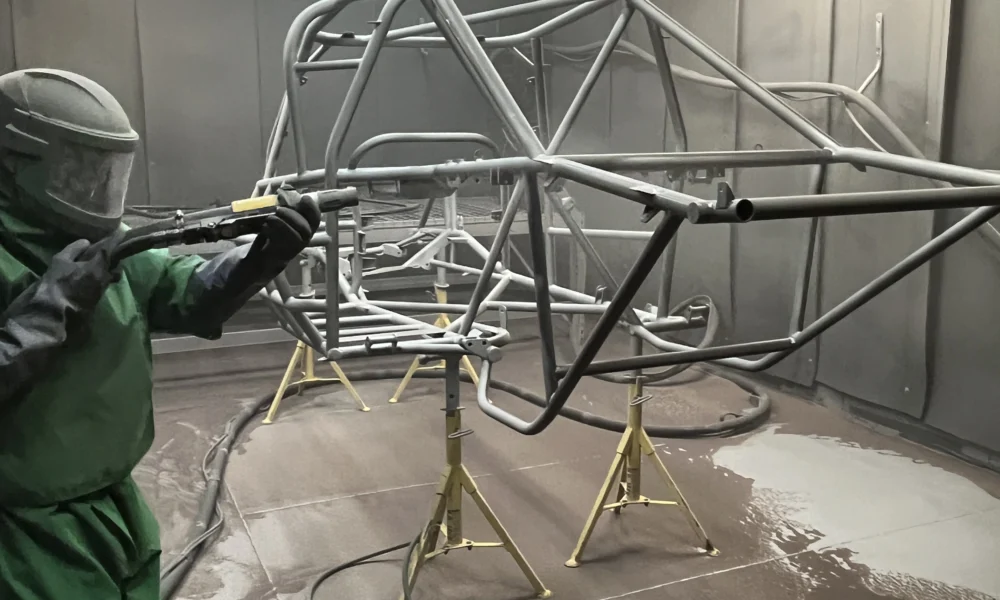
Our facility is equipped to handle a wide range of projects, from small precision parts in blast cabinets to large components up to 20 feet long and 10 feet wide in our blast room.
That range matters. Different industries require different levels of aggression, surface preparation, and finish quality. A company that understands multiple applications is better equipped to match the process to the part—not the other way around.
Why Choosing the Cheapest Option Often Costs More
One of the biggest mistakes customers make is shopping on price alone.
The lowest bid is rarely the best value, especially in sandblasting, where improper technique can permanently damage parts. When a job is priced too aggressively, the operator often has to prioritize speed over precision.
That usually means using overly aggressive blasting media or bumping the pressure up just to get the job done quickly. In the wrong application, this can lead to serious damage—warping steel, distorting components, or leaving a surface profile that is unsuitable for coating.
What looks like savings upfront can quickly turn into scrapped parts or costly rework.
How We Evaluate a Sandblasting Project
Every job starts with an evaluation—not a preset process.
We look at:
- The condition of the existing coating or rust scale
- The intended use of the part
- The base material (metallurgy)
Steel is generally more forgiving and can handle a wider range of blasting approaches. Aluminum, on the other hand, requires far more finesse—too aggressive of a blasting can easily damage or distort it. We’ve seen alloy wheels be completely ruined by improper blast media selection.
This upfront evaluation ensures we select the right process instead of forcing every job into the same method.
Blasting Methods and Media Matter More Than Most People Realize
Different blasting setups and media serve different purposes.
In our blast room, we typically use aluminum oxide for tougher coatings. It is extremely hard, cuts quickly, and can be reused many times—making it cost-effective despite a higher initial price.
For smaller or more detailed work, we use blast cabinets equipped with both aluminum oxide and glass bead media. Glass bead is ideal for achieving a smoother, more refined “vapor-blasted” finish, especially on aluminum parts. Glass bean is not suitable for coating removal as it’s a peening media not a cutting media like aluminum oxide.
Pressure control also plays a major role. Adjusting pressure allows us to fine-tune how aggressive the blast is, depending on the material and finish requirements.
Real-World Example: When Sandblasting Goes Wrong
We’ve had multiple customers come to us after trying to save money by using “accessible” blasting services—whether that’s a maintenance department or an under-equipped shop.
In several cases, parts were blasted using incorrect media, excessive pressure, or improper technique. The result was permanent damage and even scrapped parts.
We’ve even seen flat steel components severely warped—essentially turned into unusable scrap. Once metal is damaged at that level, it’s often impossible to restore.
This is why experience matters. Sandblasting is not just about removing material or creating a profile—it’s about controlling how it’s removed.
Industry Standards and Quality Control
A proper sandblasting job should meet white metal blast standards SSPC-SP 5 … meaning 100% of the surface is clean, bright white/gray metal ready for coating.
A lighter process, known as brush blasting, only lightly abrades the surface and does not provide the same level of preparation. This would be used for cold rolled steel or stainless steel blasting.
Before blasting begins, we ensure all parts are free of grease and contamination as much as possbile. During and after the process, we carefully inspect for missed areas—especially since freshly blasted metal can blend visually and make imperfections harder to see.
Attention to detail at this stage directly affects coating performance later.
Questions You Should Ask Before Hiring a Sandblasting Company
Before choosing a provider, ask:
- What grit or media do you use for my type of part?
- Do you adjust pressure based on material and condition?
- Are you targeting a white metal blast or a lighter brush blast?
- How is the job priced, and is it hourly or fixed?
Most reputable blasting work is billed hourly because removal time depends heavily on the condition of the coating or rust. Its impossible to know how fast or slow a coating can be blasted off without a test blast first.
These questions help ensure expectations are aligned before work begins.
What Makes Our Approach Different
At Adrenaline Customs, we don’t treat sandblasting as a one-size-fits-all process.
We start by understanding what the customer is trying to achieve. Sometimes the fastest method is not the best method for the application.
For automotive or hot rod parts, we often use lighter pressure and increased distance to part to reduce the risk of warping. For industrial components, a more aggressive approach may be appropriate to improve turnaround time.
We also factor in lead times and shop workload so we can balance speed and quality realistically.
In addition to blasting, we also offer in-house powder coating, allowing customers to move from surface prep to finished product in one controlled process. Many customers come in planning to paint parts, but often switch to powder coating once they understand the durability benefits.
Final Thoughts
Choosing a sandblasting company is not just about cost—it’s about control, experience, and understanding material behavior.
The right partner will evaluate your parts, choose the correct media and pressure, and prioritize long-term performance over short-term speed.
If those conversations aren’t happening before the blasting starts, that’s usually a red flag.